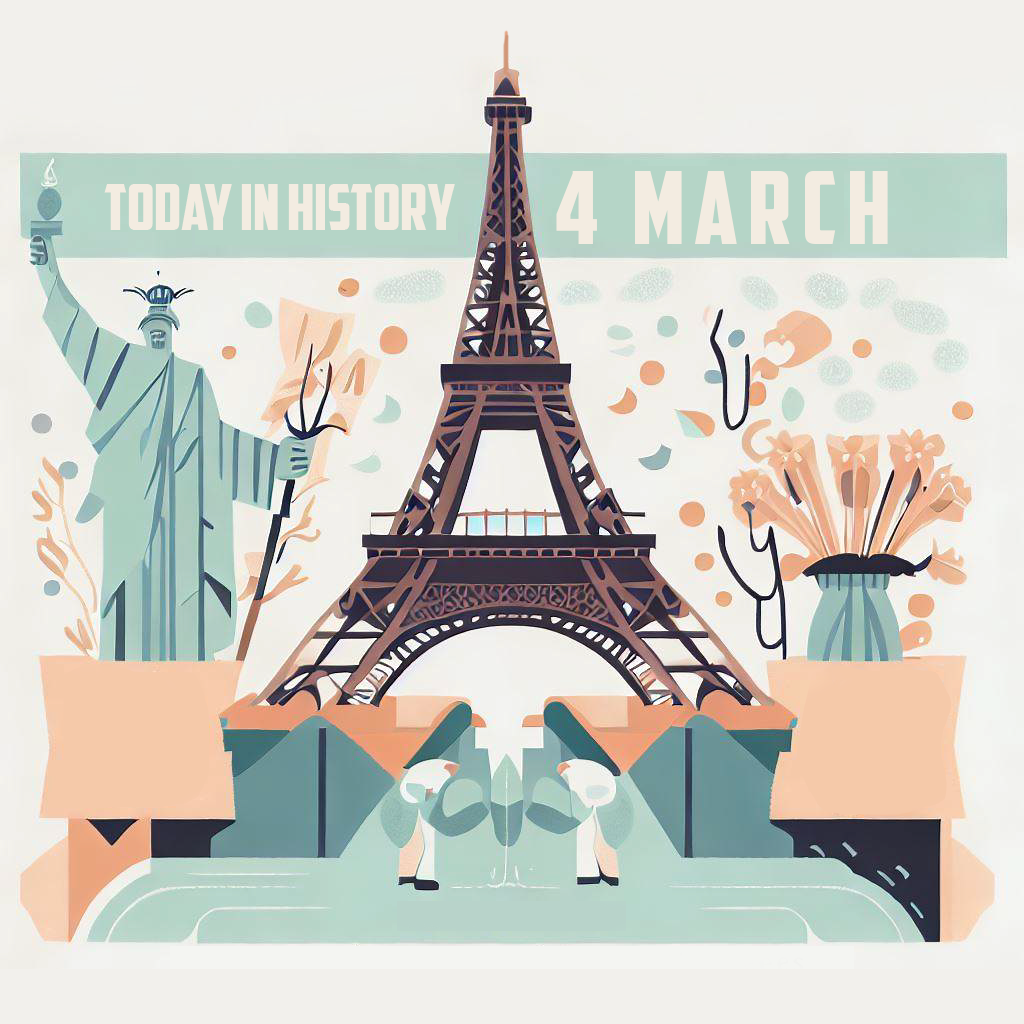
March 4th holds a special significance in various aspects of world history, particularly in the realm of politics, scientific discoveries, and cultural shifts. Historically, many nations have marked momentous events on this day, events that have rippled through time and influenced successive generations. In this discussion, we will delve deep into the annals of history to unearth and analyze the importance of this day, especially focusing on its role in shaping our world.
Today in History: 4 March

1. U.S. Presidential Inaugurations (1789-1933)
From 1789 until 1933, March 4th was the designated date for presidential inaugurations in the United States. It began with the inauguration of George Washington, the country’s first president. Though his first inauguration in 1789 took place on April 30th, his second term began on March 4, 1793. Subsequent presidents followed suit until Franklin D. Roosevelt’s second term in 1937, after which the 20th Amendment changed the date to January 20th. This day was not just a ceremonial handing over of leadership but also marked the ushering in of new political ideologies, agendas, and hopes for the nation.
2. The Founding of the U.S. Revenue Cutter Service (1791)
On March 4, 1791, the United States Congress created the Revenue Cutter Service, which was the precursor to the United States Coast Guard. This establishment ensured the enforcement of tariff and trade laws, especially deterring smuggling, which was rife in the nation’s early days. Over time, the scope and responsibilities of this service expanded, making it an essential arm of the nation’s defence and maritime law enforcement.
3. Emilio Aguinaldo’s Inauguration (1899)
On this day, Emilio Aguinaldo was inaugurated as the President of the First Philippine Republic in 1899. The event marked the Philippines’ quest for independence from colonial rule, first from Spain and later from the United States. Though the republic was short-lived due to the Philippine-American War, Aguinaldo’s inauguration underscored the Filipino desire for self-determination and sovereignty.
4. The Incorporation of the City of Toronto (1834)
March 4, 1834, saw the city of Toronto being incorporated, with William Lyon Mackenzie being its first mayor. This incorporation heralded the transformation of Toronto from a British colonial post into a bustling, cosmopolitan city. Over the decades, Toronto would grow exponentially in both size and influence, becoming Canada’s largest city and an essential global hub for commerce, culture, and innovation.
A Closer Examination: U.S. Presidential Inaugurations
The tradition of presidential inaugurations on March 4th is deeply intertwined with the political evolution of the United States. The day represents not just a change in leadership but also the peaceful transition of power, a hallmark of democratic governance.
George Washington’s first term began on April 30, 1789, primarily due to logistical delays. However, his second term saw the initiation of the March 4th tradition. This date was chosen for practical reasons, as it provided a reasonable time after the Electoral College vote in December for electors to travel to the capital and submit their ballots.
Throughout the 19th and early 20th centuries, March 4th became a day of jubilation and sometimes contention. Each inauguration bore the hopes, aspirations, and concerns of the American populace. For instance, Abraham Lincoln’s inaugural address on March 4, 1861, took place against the backdrop of a nation teetering on the brink of civil war. His speech tried to assuage the fears of the Confederate states, but war broke out a month later.
The choice of March 4th was not without its challenges. Weather often played a spoilsport. William Howard Taft’s inauguration in 1909 was met with a blizzard, forcing the ceremony indoors. Similarly, the period between the election in November and the inauguration in March sometimes led to political limbo and uncertainty, especially if there was a change in parties.
The 20th Amendment, ratified in 1933, aimed to reduce this lag, moving the inauguration to January 20th. Franklin D. Roosevelt, in 1937, became the first president to be inaugurated on this new date.
Conclusion
The 4th of March, while just another day in a year filled with historical events, has had its fair share of transformative moments. From political shifts to the establishment of vital institutions, the day has been a witness to humanity’s continuous march (pun intended) towards progress, democracy, and self-assertion. Whether it’s the inception of a nation’s leadership or the foundation of a now-global city, March 4th serves as a reminder of the ever-evolving narrative of human civilization. These events, disparate yet connected, highlight the mosaic of global history, where each piece, no matter how big or small, plays a part in the larger picture.