Every day, the pages of history turn with events, stories, and decisions that mould the fabric of human existence. February 1st is a day that has witnessed significant occurrences that have resonated across the corridors of time. Let’s dive deep into some of these moments that have shaped history on this particular day.
Today in History: 1 February

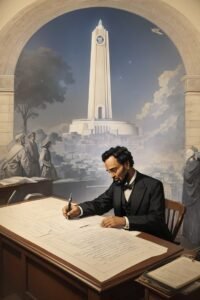
1. The Abolition of Slavery in the US (1865) One of the most transformative moments in American history took place on 1 February 1865 when President Abraham Lincoln approved the 13th Amendment to the US Constitution. This amendment officially abolished slavery, representing a monumental step towards the ideals of liberty and equality.
2. The Launch of Columbia (2003) On this day in 2003, the space shuttle Columbia tragically disintegrated upon re-entry into Earth’s atmosphere, leading to the death of all seven crew members. The disaster led to an extensive 16-month investigation and marked a pivotal moment for NASA and space exploration, leading to significant design and policy changes.
3. The Foundation of the Royal Greenwich Observatory (1675) Commissioned by King Charles II, the Royal Greenwich Observatory in London was established. This institution played a crucial role in the history of astronomy and navigation and was the location of the prime meridian – the reference line for Greenwich Mean Time (GMT).
4. The Birth of Langston Hughes (1902) A luminary figure of the Harlem Renaissance, African-American poet Langston Hughes was born today. His work celebrated the lives and struggles of ordinary black Americans and played a pivotal role in shaping the cultural and literary scene of his time.
5. The Introduction of Female Suffrage in the US (1920) The 19th Amendment to the U.S. Constitution was ratified today, granting women the right to vote. This landmark event was the culmination of decades of activism by suffragists and marked a significant stride in the pursuit of gender equality.
6. The Inception of World Hijab Day (2013) Initiated by Nazma Khan, the first World Hijab Day took place on 1 February 2013. This annual event seeks to foster religious tolerance and understanding by encouraging non-Hijabi Muslims and non-Muslims to don the hijab and experience life from a Hijabi woman’s perspective.
7. The Beatles’ Rooftop Concert (1969) On this day, The Beatles gave their final public performance on the rooftop of the Apple Corporation building in London. This impromptu concert is one of the most iconic moments in rock history.
8. The Creation of the BBC (1922) The British Broadcasting Company (later Corporation) or BBC was formed. Over the century, it has become one of the world’s premier broadcasting organizations, influencing the media landscape both in the UK and globally.
9. The Execution of Guy Fawkes (1606) Although commonly associated with the 5th of November, Guy Fawkes, the central figure of the Gunpowder Plot to blow up the English Parliament, was executed on 1 February. His failed plot and subsequent execution became the basis for the annual Bonfire Night celebrations.
10. The Murder of Rasputin (1916) Grigori Rasputin, the Russian mystic with significant influence over the last Tsar and Tsarina of Russia, died under mysterious circumstances. While the exact events of his death are debated, his murder signaled the growing unrest leading up to the Russian Revolution.
11. The Air India Flight 605 Crash (1990) Air India Flight 605 crashed on its descent into Bangalore, killing 92 people. This tragedy highlighted safety procedures and led to several reforms in Indian aviation.
12. The Commencement of Malaysia’s Federal Territory Day (1974) On this day, Kuala Lumpur, previously the capital of Selangor state, was ceded to the federal government to form a Federal Territory. This move aimed to ensure the Malaysian capital remained under federal jurisdiction rather than being part of any state.
Conclusion February 1st exemplifies the vast tapestry of human history. From groundbreaking legislation that altered the course of nations to cultural movements that reshaped societies, this day has borne witness to the immense capacity of humans to instigate change, innovate, and inspire. As we journey through these events, we understand that every day carries the potential to be historically significant. We are reminded of the dual nature of time, where moments are both fleeting and enduring, and every action, big or small, has the potential to echo across time. History is not just about the past; it’s a guide, a mentor, and a reminder of the resilience and capabilities of humanity.